
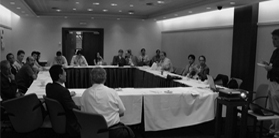
The growing interest shown internationally towards the end of the 1980’s in Automation and Robotics in Construction (ARC) led to the formation of IAARC in 1990. By then, a number of international symposia had already been convened, and the creation of IAARC satisfied the demand for an umbrella organization.
IAARC is a global community with a specific interest in all fields of construction, including civil and building engineering, machine automation, robotics applications to construction, information technologies, planning, logistics, etc. IAARC’s membership is not just restricted to end-users, manufacturers, and researchers, but welcomes participation from other industrial sectors and from government organisations.
The annual symposium of IAARC, called the International Symposium on Automation and Robotics in Construction (ISARC), hosted in numerous countries worldwide, have yielded diverse refereed papers that have been published in proceedings. Together, these form a compelling illustration of how developments in automation and robotics in construction continue to progress towards use in practice. ISARCs provide the major platform for delegates from all continents to exchange information and establish collaborations.
Milestones
1984

The first ISARC was held in Pittsburgh, Pennsylvania, U.S.A., where speakers made all the presentations from only three nations: Finland, Japan and the United States of America. This event, organized by Carnegie-Mellon University, had a workshop structure and was called ‘Robotics in Construction’. Both the first and second symposia were held as a workshop in Pittsburgh. This is how ISARC was born.
At the first Workshop Conference, held in Pittsburgh in 1984, Professor Sangrey noted that the scope of robotics applications was defined broadly to include not only mechanical systems, but also computer integrated construction and knowledge-based expert systems. He continued to say, “Robotics in construction represents one of a group of related applications for robotics in unstructured environments. Applications in agriculture, mining, undersea, space, hazardous environments and others are included with construction”.
1986
The first ISARC in the form of a symposium was held in Marseille, France, and it was titled ‘International Joint Conference on CAD and Robotics in Architecture and Construction’.
1987
The fourth ISARC was held in Haifa, Israel and was titled ‘International Symposium on Robotics and Artificial Intelligence in Building Construction’.
1988
The fifth ISARC, held in Japan under the title International Symposium on Robotics in Construction, marked a significant milestone in the symposium’s development. Extensive discussions on automation in construction helped shape the scope and direction of the event, laying the foundation for ISARC as we know it today.
1989
Since the 6th ISARC, held in San Francisco, the symposium has continued to build on its established tradition, bringing together researchers and industry professionals from around the world.
1996
The 13th ISARC, held in Tokyo, Japan, marked a significant milestone in the symposium’s international development. With 350 delegates from 20 countries and 118 research papers, the event demonstrated the growing global interest in automation and robotics in construction and the symposium’s expanding role as an international platform for research exchange.
1998
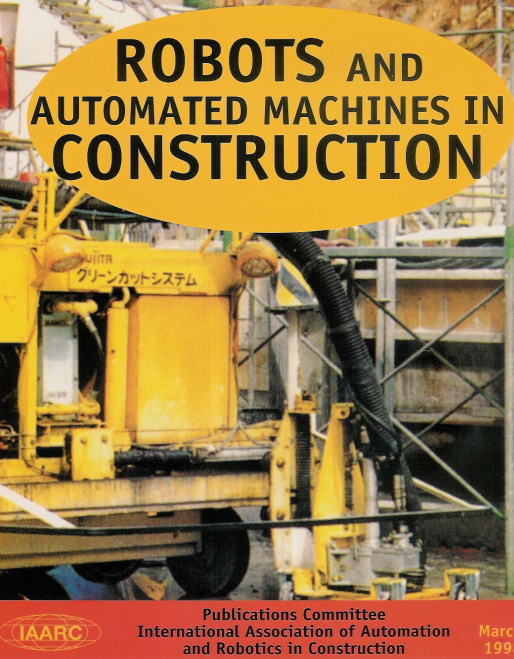
Over time, IAARC has been responsible for several publications. The 1998 Catalogue on Robots and Automated Machines in Construction (17 MB), for example, was one of its first editions on technical characteristics, features, work execution records and usage conditions of 76 robots from Germany, Japan and Sweden.
2009


IAARC and CIB (The International Council for Research and Innovation in Building and Construction) formed a partnership to further promote automation and robotics in construction. For a number of years an IAARC Academy broadened the education on related topics.
2016
IAARC had its first student chapter founded at the International University of Florida. Since then, numerous more Student Chapters & Innovation Hubs followed with the intent of motivating the students and industry to focus on themes related to automation and robotics in construction.
2018
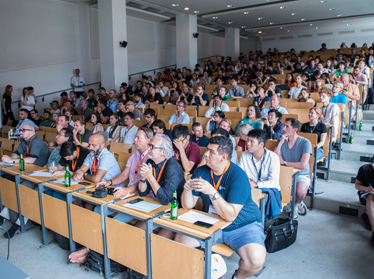
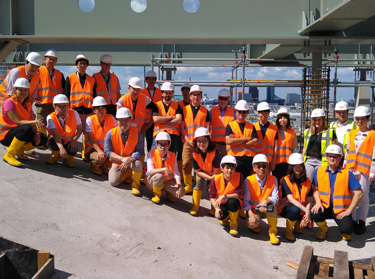
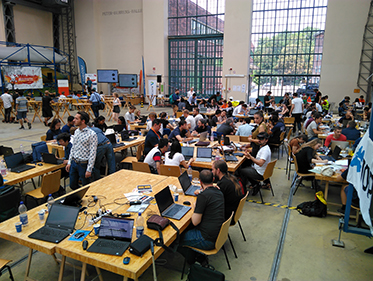
Over time, the ISARC program and the number of attendees increased continuously. In Berlin (Germany), an international hackathon, technical tours to research laboratories, visits to Berlin construction sites, and the academic-style presentations and social events during the symposium attracted close to 500 participants from industry, academia, and governments.

2020
IAARC held for the first time its annual symposium online. Given the travel restrictions due to the COVID-19 pandemic, the more than 300 participants that attended demonstrate the high interest in the academic world and the industry on topics related to research and development in automation and robotics of construction.
2022
IAARC expanded its publication activities beyond ISARC proceedings to include papers from the ICRA Future of Construction Workshop, held annually in conjunction with the IEEE International Conference on Robotics and Automation (ICRA). This initiative strengthened collaboration between the construction and robotics research communities, promoting advances in construction robotics, autonomous navigation, motion and task planning, and safe human–robot interaction.
2025
IAARC held its first Summer School, Digital Twins in Construction (DTCSS), on June 2025 at Università Politecnica delle Marche (UNIVPM) in Ancona, Italy. This marked an important milestone in IAARC’s educational activities, introducing a dedicated Summer School programme focused on digital twin technologies in construction.